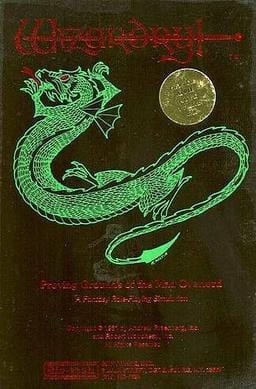
Wizardry
1981 · RPG · Apple II
Overview
Wizardry (1981) is Sir-Tech's first-person party dungeon crawler for the Apple II, whose rules later shaped Japanese RPGs such as Dragon Quest.
Deep Dive
Wizardry: Proving Grounds of the Mad Overlord has players roll a party of six adventurers and lead them through ten first-person dungeon levels in search of the wizard Werdna. Death is permanent unless survivors can carry the body back to town, and statistics are rolled at random, which led players to re-roll characters for hours. Created by Andrew Greenberg and Robert Woodhead at Cornell and inspired by PLATO mainframe games, it sold in the hundreds of thousands and deeply influenced the RPG in Japan.
Developer Story
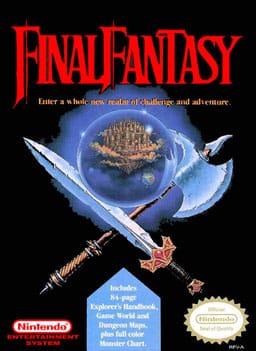
Wizardry was created by Andrew Greenberg and Robert Woodhead while they were students at Cornell University in 1981. It was directly inspired by the PLATO mainframe RPG games Oubliette and Moria. The game's rigorous dungeon mechanics — permanent character death, class system, monster encounters — became the template for Japanese RPGs. The Dragon Quest and Final Fantasy series developers explicitly cited Wizardry as their primary influence.
Did You Know?
- Wizardry directly inspired Dragon Quest and Final Fantasy — both series were created by developers who grew up playing Wizardry on early Japanese personal computers.
- Permanent character death (permadeath) was a feature, not a bug — characters who died in the dungeon could only be retrieved if a surviving party member carried the body out.
- The game's character creation involved rolling statistics randomly and re-rolling until a satisfactory character appeared — a process players sometimes repeated for hours.
- Wizardry sold over 100,000 copies at a time when most computer games sold in the thousands, making it one of the first blockbuster PC games.
- Robert Woodhead later moved to Japan, where Wizardry's cultural influence was enormous — the franchise published dozens of Japan-exclusive sequels through the 1990s and 2000s.
Sources & further reading
- Wizardry: Proving Grounds of the Mad Overlord — Wikipedia