Ultima I
1981 · RPG · Apple II
Overview
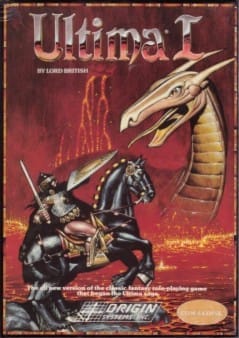
Ultima I (1981) is Richard Garriott's Apple II role-playing game, the first commercial Ultima, mixing dungeon crawling with a trip into space.
Deep Dive
Ultima I: The First Age of Darkness sends the player across the lands of Sosaria to defeat the wizard Mondain, exploring an overhead world map, towns and first-person dungeons — and, unusually, flying into space to fight in a starfighter. Richard Garriott, writing as 'Lord British', had sold his earlier game in hand-labelled bags from the Texas computer store where he worked; Ultima I was published by California Pacific and began one of the most influential RPG series of all.
Developer Story
Ultima I was created by Richard Garriott, then a teenager working at a computer store in Texas. He had been writing fantasy role-playing games for his Apple II under the pen name "Lord British" and sold hand-labelled copies in plastic bags from the shop where he worked. Ultima I was his first commercially published game, released by California Pacific Computer Company in 1981. Garriott went on to create one of the most influential RPG series in history.
Did You Know?
- Garriott sold early copies of his games in hand-labelled Ziploc bags from a computer store where he worked as a teenager — one of the earliest examples of indie game distribution.
- He adopted the name "Lord British" from a nickname given to him by American classmates in England who teased him for his accent.
- Ultima I mixed fantasy RPG with space combat — players could travel to space stations and fight in a starfighter after building up their land-based character.
- The original version contained personal details about Garriott's friends and teachers disguised as in-game characters.
- Garriott designed the game's world on graph paper, creating a coherent geography that subsequent Ultima games would revisit and expand.
Sources & further reading
- Ultima I: The First Age of Darkness — Wikipedia