
Shoot 'em ups are games where the player pilots a craft shooting enemies while dodging their fire. No genre has been more commercially transformative: Space Invaders alone turned video games from novelty into a billion-dollar global industry.

Platform games task players with navigating environments by jumping across suspended platforms and obstacles. Donkey Kong introduced the jump mechanic in 1981; Super Mario Bros. perfected it in 1985, creating one of the most commercially successful and culturally influential genres in history.

Adventure games are narrative-driven experiences where players solve puzzles and explore stories. Beginning with Colossal Cave Adventure in 1976, the genre proved video games could tell stories — producing the first interactive fiction, the first graphical adventure games, and enduring masterpieces of comedic writing.

Role-playing games let players inhabit characters who grow in strength and story through exploration and combat. Born from tabletop D&D on university mainframes, CRPGs created gaming's deepest traditions of narrative ambition, world-building, and character investment.

Fighting games pit players in head-to-head combat using special moves and combos. Beat 'em ups send players through side-scrolling waves of enemies. Together, these two genres created competitive gaming culture and the cooperative couch-play tradition.
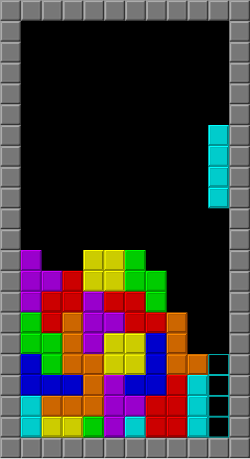
Puzzle and maze games challenge players with spatial reasoning and logic. Pac-Man transformed maze navigation into a global cultural phenomenon. Tetris became the most widely played game in history. The genre's elegant simplicity achieves universal appeal across ages and cultures like no other.

Racing games simulate vehicular competition. From Gran Trak 10's first digital circuit in 1974 to Pole Position's recreation of Japan's Fuji Speedway in 1982, the genre drove some of the most spectacular hardware innovations in arcade history and created the most immersive cabinet experiences of their era.

Sports games simulate athletic competition. Pong (1972) — a simplified game of table tennis designed as a training exercise — became the first commercially successful video game and launched the entire industry. Sports games drove console adoption for decades and established the annual franchise model.
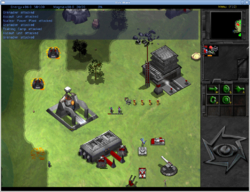
Strategy and simulation games reward planning, resource management, and systems thinking. From chess programs to Civilization, SimCity to X-COM, these games challenge players to manage complexity — and created gaming's deepest intellectual traditions and most devoted communities.

Action games are fast-paced games demanding quick reflexes and real-time decision making. The broadest and most commercially dominant genre in gaming, action games established the visual and mechanical grammar that nearly every other genre builds upon.

Simulation games model real systems in detail, prizing fidelity and depth over arcade immediacy. From flight simulators demanding hours of study to city builders where the player is planner rather than hero, the genre asks players to understand a system rather than beat it.

Rhythm games ask the player to match inputs to music with precise timing. Born in Japan in the late 1990s and exploding with Dance Dance Revolution, the genre turned playing games into a physical, public performance — and made the arcade a stage.

Light-gun shooters put a gun-shaped controller in the player's hands and a screen full of targets in front of them. On rails and unrelenting, the genre defined the arcade's later years — and died with the CRT televisions its technology depended upon.

Roguelikes generate a new dungeon every time you play and delete your character permanently when you die. Born on university mainframes in 1980, the genre made randomness and loss into design principles — and its ideas now sit inside games of every kind.

The first-person shooter put the player inside the world rather than above it, and in doing so became the defining genre of PC gaming. Its lineage runs from maze crawlers on mainframes through Wolfenstein 3D and Doom — which gave the form its name, its speed and its shareware distribution model — to Quake's true 3D engine and Half-Life's insistence that a shooter could tell a story without ever taking the camera away from you.

Real-time strategy took the war game off the turn-based grid and set it running against a clock. Gather resources, build a base, produce an army, and destroy the enemy — all while they are doing exactly the same thing, at the same moment, and every second you spend deciding is a second they spend acting. Dune II established the template, Command & Conquer and Warcraft made it a phenomenon, and StarCraft turned it into a professional sport.

The massively multiplayer online role-playing game took the persistent worlds of MUDs and gave them graphics, then handed them to tens of thousands of simultaneous strangers. Ultima Online proved the commercial case in 1997, EverQuest turned it into an obsession, and the genre spent the next decade discovering that the hardest problem in world design is not building the world — it is the people you let into it.