Prince of Persia
1989 · Platform / Action · Apple II / DOS
Overview
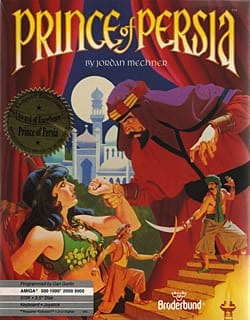
Prince of Persia (1989) is Jordan Mechner's cinematic platformer: escape the Sultan's dungeons in one hour to save the princess, with rotoscoped animation.
Deep Dive
A young man thrown into the Sultan's dungeons by the vizier Jaffar has sixty minutes to escape and rescue the princess. Twelve levels of traps, crumbling floors, gates and sword-fights test timing, and the one-hour limit runs across the whole game. Jordan Mechner filmed his brother running and jumping and traced the footage to animate the hero with a realism no computer game had shown, giving every leap and fall real weight. It was ported to many platforms and became a long-lived series.
Developer Story
Prince of Persia was designed by Jordan Mechner in 1989 over four years of development. Mechner used rotoscoping — tracing over video footage of his brother David running, jumping, and falling — to create the most realistic human animation seen in a home computer game. The one-hour time limit created tension across the entire game. Mechner documented the entire development process in journals later published as "The Making of Prince of Persia."
Did You Know?
- Mechner rotoscoped his brother David's movements by filming him and tracing each frame onto animation cells — creating animation unlike anything in 1989 games.
- The one-hour time limit was global — players who spent too long on any puzzle sequence ran out of time for later ones, requiring holistic time management.
- Mechner kept a detailed journal throughout development, published decades later — one of the few primary source documents of 1980s game creation.
- The original Apple II version took four years to develop — an unusually long timeline that Mechner balanced against other projects.
- Prince of Persia was ported to 25 platforms and inspired the modern platformer's emphasis on physics-based, weighty character movement.
Sources & further reading
- Prince of Persia — Wikipedia