Zork
1977 · Text Adventure · PDP-10 / Multiple
Overview
The definitive text adventure: four MIT programmers' 1977 game of treasure-hunting in the Great Underground Empire, later split into the Zork trilogy and the foundation of Infocom.
Deep Dive
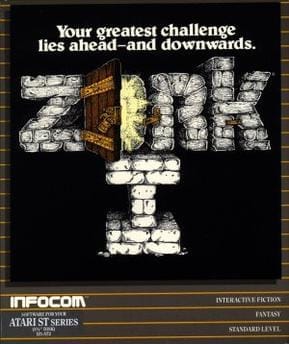
Tim Anderson, Marc Blank, Bruce Daniels and Dave Lebling wrote Zork in 1977 on a PDP-10 mainframe. The player explores the ruins of the Great Underground Empire in search of treasure, moving through hundreds of locations and handling objects by typing commands in ordinary English. The game answers as a narrator, describing where the player is and what happens after each instruction. The original was too big for the home computers of the time, so its creators — now working as the company Infocom — divided it into three games: Zork I: The Great Underground Empire, Zork II: The Wizard of Frobozz and Zork III: The Dungeon Master, released for a wide range of personal computers from 1980. Its parser, wit and atmosphere made Zork the most famous work of interactive fiction and set the template for Infocom's later games.
Developer Story
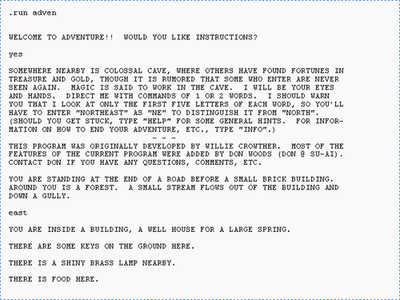
Zork was created between 1977 and 1979 by four MIT programmers — Tim Anderson, Marc Blank, Bruce Daniels, and Dave Lebling — on a PDP-10 mainframe. The team were members of the MIT Dynamic Modelling Group and wrote Zork as a successor to Colossal Cave Adventure. All four were among the founders of Infocom, which commercialised Zork in 1980 and went on to publish some of the most sophisticated interactive fiction of the 1980s.
Did You Know?
- Zork's parser understood complex English sentences — "put the sword in the trophy case" — at a time when most games accepted only two-word commands.
- The name "Zork" was MIT hacker slang for an unfinished or poorly functioning program — the creators used it as a placeholder and it stuck.
- The original mainframe Zork was 1MB in size — far too large for home computers, so Infocom split it into three separate games for commercial release.
- "It is pitch black. You are likely to be eaten by a grue." — the grue warning became one of the most quoted lines in gaming history.
- Activision bought Infocom in 1986, after the costly failure of Infocom's business database, Cornerstone, had left it in financial trouble.
Sources & further reading
- Zork — Wikipedia