Maniac Mansion
1987 · Point-and-Click Adventure · Commodore 64 / Multiple
Overview
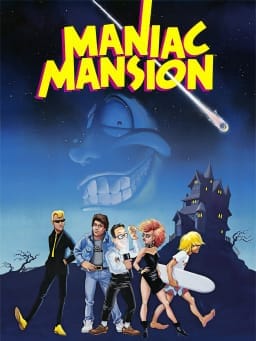
Maniac Mansion (1987) is Lucasfilm Games' comedy adventure: pick three teenagers to rescue Sandy from Dr. Fred's house — and debut the SCUMM engine.
Deep Dive
Dave's girlfriend Sandy has been kidnapped by the Edisons and taken into their mansion. Players choose two companions from six teenagers with different skills, and the choice changes which puzzles can be solved and how — leading to several possible endings. Commands are built by clicking verbs and objects, replacing typed commands. Ron Gilbert and Gary Winnick wrote the SCUMM scripting system for it, which went on to power Lucasfilm's adventures from Monkey Island to Day of the Tentacle.
Developer Story
Maniac Mansion was designed by Ron Gilbert and Gary Winnick at LucasArts (then Lucasfilm Games) in 1987. Gilbert invented the SCUMM scripting engine specifically for this game, which allowed complex adventure game logic without requiring constant reprogramming. The point-and-click interface replaced the text parser, making adventure games accessible to players who weren't typists. Gilbert and Winnick based the mansion on a real house in San Rafael, California.
Did You Know?
- SCUMM (Script Creation Utility for Maniac Mansion) was the engine Ron Gilbert invented for this game — it went on to power Monkey Island, Indiana Jones, and Day of the Tentacle.
- Dave is joined by two teenagers chosen from six, each with different skills — different combinations open different solutions.
- Maniac Mansion featured multiple different endings depending on which characters survived and which goals were completed.
- The game could be "broken" by feeding a hamster to a microwave — triggering a game-ending consequence deliberately included as player choice.
- A sequel, Day of the Tentacle (1993), featured Maniac Mansion playable in its entirety as a game within the game.
Sources & further reading
- Maniac Mansion — Wikipedia