Demon Attack
1982 · Fixed Shooter · Atari 2600
About Demon Attack
Demon Attack (1982) is Rob Fulop's Atari 2600 shooter for Imagic in which a laser cannon fights waves of winged demons, Imagic's best-selling game and the subject of an Atari lawsuit over its Intellivision version.
Demon Attack in Depth
From the surface of a planet, the player moves a laser cannon left and right, shooting winged creatures that hover above and attack in shifting patterns. Players start with three lives, called bunkers, shown at the bottom of the screen, and lose one each time they are hit. Waves grow more complex: in wave five, enemies split into two smaller ones when shot, and later demons dive at the cannon. A Tracer Shot mode lets players steer lasers after firing. Two players can compete, each with their own cannon, score and bunkers at the same time, or cooperate, swapping control of movement and firing every four seconds.
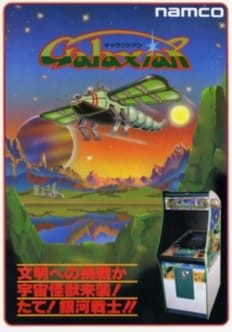
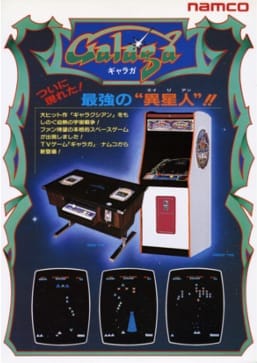
Fulop modelled it on Galaxian. The first complete version repeated one enemy pattern endlessly, so he worked on additional, more organic movements, and because the 2600 made horizontal movement smooth and easy, the demons move mostly horizontally. It was his first game with a graphic artist, Michael Becker, whose eight-phase animation for the demons Racing the Beam later said "broke the mold" for console development. Gary Kato's Intellivision version let demons move in any direction and added the flagship Pandemonium as a final boss, destroyed by eroding its shield and hitting a small rotating weak point.
Making Demon Attack
Fulop co-founded Imagic on 17 July 1981, and Demon Attack took nine months; he had to fight marketing to keep it in the lab for a final month of polish. Released in March 1982 with Star Voyager and Trick Shot, it was the third best-selling console game of 1982 behind Pitfall! and Pac-Man. Atari, which held the home rights to Phoenix, sued over the Intellivision version's similar boss; Fulop, who disliked the boss, called the dispute "a silly hustling and political thing", and a January 1983 settlement let Imagic keep releasing it on many consoles and computers. Critics praised its graphics and unpredictable enemies, and it won Video Game of the Year at the 1983 Arcade Awards, while Billboard named Fulop designer of the year. Fulop said he knew it would do well but not that well, and regretted not making a sequel. GameSpy added it to its Hall of Fame in 2002.
Demon Attack Trivia
- Fulop left Atari after his Christmas bonus for Space Invaders turned out to be a voucher for a free turkey dinner.
- He said he wanted to make something "so good, they'd cry when they saw it".
- His working title was Death from Above.
- Becker made the cover art from model toys painted silver and blue.
- The Odyssey 2 version was the first cartridge for that system from an independent publisher.
Sources & further reading
- Demon Attack — Wikipedia