Romancing SaGa
1992 · RPG · SNES / Super Famicom
About Romancing SaGa
Romancing SaGa (1992) is Square's Super Famicom role-playing game of eight protagonists exploring the world of Mardias in any order, the debut of Akitoshi Kawazu's Free Scenario System.
Romancing SaGa in Depth
After choosing one of eight protagonists, the player roams the overworld freely, triggering events, fighting and taking on side activities, and recruits a party that can include the unchosen heroes. The main story advances according to how many events have been completed, the party's strength and who the player has talked to, an approach called the Free Scenario System. Battles begin on touching enemy sprites, and the party fights in a formation on a three-by-three grid that affects reach and defence. There are no experience points: statistics rise at random according to actions taken in battle, abilities spend Battle Points, and new skills come from using weapons repeatedly. Fallen party members recover at the end of a battle, but losing everyone ends the game.
A thousand years earlier, three evil gods, Death, Saruin and Schirach, fought the benevolent Elore; Saruin was imprisoned by ten Fatestones and the sacrifice of the hero Mirsa, and the stones have since scattered. The protagonists, including the noble heir Albert, the nomad Aisha, the thief Jamil, the witch-raised Claudia, the pirate Hawk, the warrior Sif, the adventurer Gray and the entertainer Barbara, are drawn into recovering the Fatestones before Saruin is freed.
Making Romancing SaGa
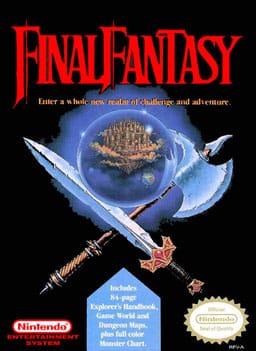
Nintendo asked Square in 1990 for a new SaGa on the upcoming Super Famicom, after the Game Boy games' success. Series creator Akitoshi Kawazu directed, designed and wrote it, aiming to replace a single path with many stories, in direct contrast to the linear Final Fantasy; writing a central plot alongside eight separate stories proved hard, and Nintendo's cartridge limits forced cuts. Kazuko Shibuya made the sprites from Kobayashi's designs, and the text used extra-large kanji to save space.
Released on 28 January 1992, Square's second Super Famicom game after Final Fantasy IV, it topped Famitsu's sales charts from February to March 1992 and sold over 1.3 million copies worldwide by 2004. Famitsu's reviewers found its graphics weaker than Final Fantasy's but praised its freedom. GamePro reported a planned English release, but its complexity and amount of text kept it in Japan. Romancing SaGa 2 and 3 followed, and it was remade for the PlayStation 2 as Minstrel Song in 2005.
Romancing SaGa Trivia
- The "Romancing" title was suggested by Nobuyuki Inoue, inspired by the film Romancing the Stone.
- The eight protagonists drew on taiga dramas, with the number referencing the novel Nansō Satomi Hakkenden.
- It was artist Tomomi Kobayashi's first video game; at her busiest she designed six characters a day, 40 in all.
- Yoshinori Kitase designed its field maps, and Tetsuya Takahashi was on the graphics staff.
- Composer Kenji Ito described its score as "rough" compared with Final Fantasy's "smooth" sound, and was left burnt out.
Sources & further reading
- Romancing SaGa — Wikipedia