Shigeru Miyamoto
Japan · Born 1952 · Nintendo · Game Designer / Producer
Shigeru Miyamoto created Donkey Kong, Super Mario Bros., and The Legend of Zelda, establishing the foundational vocabulary of action-platformer and adventure game design.
Shigeru Miyamoto studied industrial design at Kanazawa College of Art before joining Nintendo in 1977 as the company's first staff artist. His early years were spent illustrating arcade cabinet artwork until president Hiroshi Yamauchi assigned him to redesign a struggling arcade title called Radar Scope for the American market in 1981. Working without formal programming knowledge but with a clear sense of character and spectacle, Miyamoto created Donkey Kong — the first game to tell a narrative through gameplay, introducing a character with personality, a damsel in distress, and a villain with motivation. The game became one of the most successful coin-ops of its era and established Miyamoto as Nintendo's principal creative talent. Miyamoto's design philosophy centres on the idea of a magic toy box: a game world must feel tangibly real, with objects and physics that invite experimentation. He pioneered the practice of designing a game's core mechanic before its theme, most famously with Super Mario Bros. (1985), in which the scrolling momentum and jump arc were locked down months before the mushrooms, pipes, and castles were added. He also insisted on accessible controls — every NES game he oversaw could be understood within minutes by a newcomer — a principle that informed Nintendo's hardware strategy for decades. His simultaneous development of Super Mario Bros. and The Legend of Zelda for the Famicom Disk System, releasing both in 1986, demonstrated that the same designer could master linear spectacle and open-world exploration with equal authority. His major works span four decades and multiple hardware generations: Donkey Kong (1981), Mario Bros. (1983), Super Mario Bros. (1985), The Legend of Zelda (1986), Super Mario Bros. 3 (1988), F-Zero (1990), Super Mario World (1990), Star Fox (1993), Super Mario 64 (1996), The Legend of Zelda: Ocarina of Time (1998), Pikmin (2001), and Wii Sports (2006). Each represents a deliberate expansion of what games could express, from the kinetic joy of platforming to 3D spatial navigation to motion-controlled social play. Super Mario 64 in particular redefined what it meant to move through a three-dimensional game world, establishing conventions of camera control and analogue movement still in use today. Miyamoto's legacy is the broadest in the medium's history. He did not merely create beloved franchises — he authored the conventions by which dozens of genres are still judged. His insistence on "horizontal" accessibility, meaning games that reward casual and expert players simultaneously, shaped Nintendo's identity as a company and influenced every platform holder that followed. By 2024, the franchises he founded had collectively shipped over a billion units. He was named a Person of Cultural Merit by the Japanese government in 2019, the first video game designer to receive the honour, and remains an executive at Nintendo, where he continues to influence product development.
- Donkey Kong (1981)
- Super Mario Bros. (1985)
- The Legend of Zelda (1986)
- Super Mario 64 (1996)
- Pikmin (2001)
- Joined Nintendo in 1977 as the company's first staff artist
- Created Donkey Kong in 1981 as a redesign of an unsold arcade cabinet
- Designed Super Mario Bros. and The Legend of Zelda simultaneously in the mid-1980s
- Super Mario 64 (1996) established 3D platformer conventions still used today
- Named a Person of Cultural Merit by the Japanese government in 2019
61 Games in Archive

Donkey Kong
Arcade
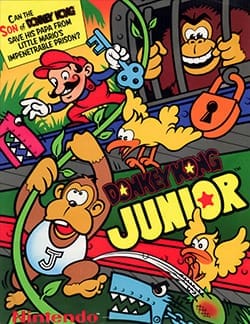
Donkey Kong Jr.
Arcade
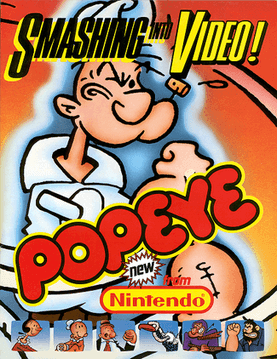
Popeye
Arcade

Mario Bros.
Arcade
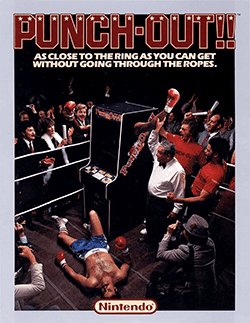
Punch-Out!!
Arcade
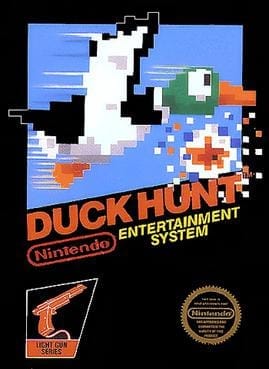
Duck Hunt
NES

Excitebike
NES / Arcade

Super Mario Bros.
NES

Metroid
NES / Famicom Disk System

Kid Icarus
NES / Famicom Disk System

The Legend of Zelda
NES

Mike Tyson's Punch-Out!!
NES

Super Mario Bros. 3
NES / Famicom

Super Mario Bros. 2
NES

Zelda II
NES
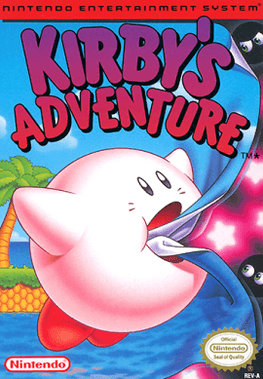
Kirby's Adventure
NES
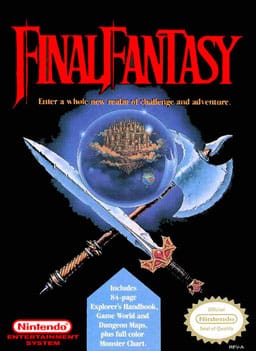
Final Fantasy
NES

Super Mario World
SNES

F-Zero
SNES

The Legend of Zelda: A Link to the Past
SNES

Super Mario Kart
SNES

Star Fox
SNES

Super Metroid
SNES

Donkey Kong Country
SNES

EarthBound
SNES

Super Mario World 2: Yoshi's Island
SNES

Super Mario Land
Game Boy

The Legend of Zelda: Link's Awakening
Game Boy

Kirby's Dream Land
Game Boy

Pokémon Red and Blue
Game Boy

Super Mario 64
Nintendo 64

GoldenEye 007
Nintendo 64