
Shoot 'em ups are games where the player pilots a craft shooting enemies while dodging their fire. No genre has been more commercially transformative: Space Invaders alone turned video games from novelty into a billion-dollar global industry.

Platform games task players with navigating environments by jumping across suspended platforms and obstacles. Donkey Kong introduced the jump mechanic in 1981; Super Mario Bros. perfected it in 1985, creating one of the most commercially successful and culturally influential genres in history.

Adventure games are narrative-driven experiences where players solve puzzles and explore stories. Beginning with Colossal Cave Adventure in 1976, the genre proved video games could tell stories — producing the first interactive fiction, the first graphical adventure games, and enduring masterpieces of comedic writing.

Role-playing games let players inhabit characters who grow in strength and story through exploration and combat. Born from tabletop D&D on university mainframes, CRPGs created gaming's deepest traditions of narrative ambition, world-building, and character investment.

Fighting games pit players in head-to-head combat using special moves and combos. Beat 'em ups send players through side-scrolling waves of enemies. Together, these two genres created competitive gaming culture and the cooperative couch-play tradition.

Puzzle and maze games challenge players with spatial reasoning and logic. Pac-Man transformed maze navigation into a global cultural phenomenon. Tetris became the most widely played game in history. The genre's elegant simplicity achieves universal appeal across ages and cultures like no other.

Racing games simulate vehicular competition. From Gran Trak 10's first digital circuit in 1974 to Pole Position's photorealistic Fuji Speedway in 1982, the genre drove some of the most spectacular hardware innovations in arcade history and created the most immersive cabinet experiences of their era.

Sports games simulate athletic competition. Pong (1972) — a simplified game of table tennis designed as a training exercise — became the first commercially successful video game and launched the entire industry. Sports games drove console adoption for decades and established the annual franchise model.
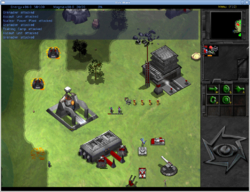
Strategy and simulation games reward planning, resource management, and systems thinking. From chess programs to Civilization, SimCity to X-COM, these games challenge players to manage complexity — and created gaming's deepest intellectual traditions and most devoted communities.

Action games are fast-paced games demanding quick reflexes and real-time decision making. The broadest and most commercially dominant genre in gaming, action games established the visual and mechanical grammar that nearly every other genre builds upon.