Satoshi Tajiri
Japan · Born 1965 · Game Freak / Nintendo · Game Designer
Satoshi Tajiri created Pokémon, transforming a childhood insect-collecting hobby into the highest-grossing media franchise in history across games, animation, and merchandise.
Satoshi Tajiri grew up in Machida, Tokyo, spending his childhood collecting insects in the fields and rice paddies surrounding his home — fields that were progressively replaced by urban development throughout his adolescence. His second obsession was arcade games, which he played compulsively and documented in a self-published magazine, Game Freak, that he began producing with his friend Ken Sugimori in 1981. The fanzine covered arcade strategy and attracted enough subscribers that Tajiri and Sugimori incorporated Game Freak as a game development company in 1989. Their early output — Quinty (1989), known in North America as Mendel Palace, published by Nintendo — was commercially modest, but the Nintendo relationship that producing it established proved essential. Tajiri used the connection to pitch his portable creature-collection concept directly to Shigeru Miyamoto, who became the project's executive producer. The concept for Pokémon originated from watching children use the Game Boy link cable, an accessory rarely exploited by existing software, and imagining the cable as a conduit through which insects could travel between devices. Tajiri spent six years, from 1990 to 1996, developing what became Pocket Monsters Red and Green — a period during which Game Freak nearly went bankrupt three times and most of the staff went without salary for extended periods. Tajiri designed the game around a core tension between completionism and social interaction: no single game cartridge contained all 151 Pokémon, and certain species could only be acquired by trading with another player via link cable, making peer-to-peer exchange a mandatory game mechanic rather than an optional feature. The design was simultaneously a commercial structure — two cartridges sold rather than one — and a social engineering system that turned the schoolyard into a trading floor. Pokémon Red and Blue released in Japan in 1996 and in North America in 1998, accompanied by an animated television series and a trading card game that expanded the franchise beyond software. The combined media machine drove a cultural phenomenon — "Pokémania" — unprecedented in consumer electronics history, with the animated series peaking at 83 million viewers worldwide and the trading card game producing counterfeiting operations large enough to attract law enforcement attention. Pokémon Gold and Silver (1999) expanded the world to 251 species and introduced a real-time internal clock that made the game world responsive to the actual time of day, a design feature as technically modest as it was emotionally effective. By 2024, the Pokémon franchise had generated over $150 billion in revenue across games, merchandise, animation, and cards — the highest-grossing media franchise in history. Tajiri has rarely given interviews and has maintained a deliberately low public profile throughout Pokémon's commercial ascendancy, leaving Nintendo and The Pokémon Company to manage the franchise's expansion while he continues to direct game development at Game Freak. His creative legacy is the creature-collection RPG as a genre, which spawned hundreds of spiritual successors — Digimon, Dragon Quest Monsters, Yo-kai Watch, Monster Hunter, Temtem, and eventually Palworld — none of which have approached the cultural reach of the original. More broadly, Tajiri demonstrated that a console's peripheral hardware, rather than being an afterthought, could be the axis around which an entire game design philosophy rotated, and that the highest-grossing entertainment franchise in history could grow from the memory of a child chasing insects through a field.
- Quinty / Mendel Palace (1989)
- Pokémon Red and Green (1996)
- Pokémon Gold and Silver (1999)
- Pokémon Ruby and Sapphire (2002)
- Ran a self-published arcade gaming fanzine called Game Freak from 1981 with Ken Sugimori
- Incorporated Game Freak as a developer in 1989; first title was Quinty, published by Nintendo
- Spent six years developing Pokémon (1990–1996) while the company nearly went bankrupt three times
- Designed Pokémon around mandatory link-cable trading, requiring two game cartridges to complete the Pokédex
- Pokémon is the highest-grossing media franchise in history, exceeding $150 billion in revenue by 2024
61 Games in Archive

Donkey Kong
Arcade

Donkey Kong Jr.
Arcade

Popeye
Arcade

Mario Bros.
Arcade
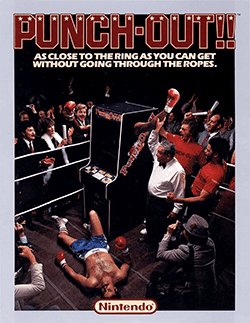
Punch-Out!!
Arcade
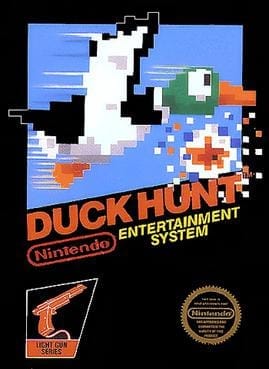
Duck Hunt
NES

Excitebike
NES / Arcade

Super Mario Bros.
NES

Metroid
NES / Famicom Disk System

Kid Icarus
NES / Famicom Disk System

The Legend of Zelda
NES

Mike Tyson's Punch-Out!!
NES

Super Mario Bros. 3
NES / Famicom

Super Mario Bros. 2
NES

Zelda II
NES
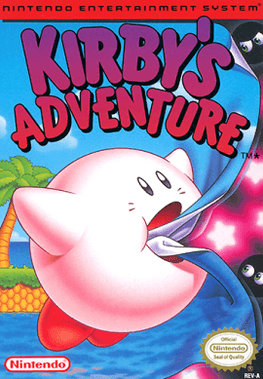
Kirby's Adventure
NES
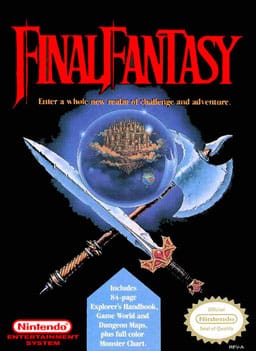
Final Fantasy
NES

Super Mario World
SNES

F-Zero
SNES

The Legend of Zelda: A Link to the Past
SNES

Super Mario Kart
SNES

Star Fox
SNES

Super Metroid
SNES

Donkey Kong Country
SNES

EarthBound
SNES

Super Mario World 2: Yoshi's Island
SNES

Super Mario Land
Game Boy

The Legend of Zelda: Link's Awakening
Game Boy

Kirby's Dream Land
Game Boy

Pokémon Red and Blue
Game Boy

Super Mario 64
Nintendo 64

GoldenEye 007
Nintendo 64