Gunpei Yokoi
Japan · Born 1941 · Nintendo · Game Designer / Hardware Engineer
Gunpei Yokoi invented the Game Boy and the Game & Watch handheld series, and produced Metroid, establishing Nintendo's philosophy of "lateral thinking with withered technology."
Gunpei Yokoi joined Nintendo in 1965 as a maintenance engineer for the company's hanafuda playing-card machines, years before Nintendo entered the video game business. His career took its decisive turn in 1969 when Nintendo president Hiroshi Yamauchi noticed a mechanical toy Yokoi had built from an extendable arm to amuse himself on the assembly line. Yamauchi ordered it into production as the Ultra Hand, which became a major commercial success and established Yokoi as Nintendo's hardware inventor. Over the following decade he developed dozens of toy and electronic products, including the Color TV-Game series, before leading Nintendo's entry into portable electronic games with the Game & Watch line beginning in 1980. The clamshell design of the Game & Watch Multi-Screen models directly influenced the layout of Nintendo's later handheld hardware. Yokoi's central design philosophy, which he called "lateral thinking with withered technology," held that mature, inexpensive technology used creatively produced better consumer products than cutting-edge hardware used conventionally. This principle guided every major project he oversaw. The Game Boy (1989), which he designed and shepherded to market, used a low-power monochrome LCD screen at a time when competitors like the Sega Game Gear were offering colour displays. The Game Boy's inferior screen was outweighed by its 10-hour battery life and $89 price point, and it outsold all colour rivals combined. The same thinking governed the NES controller's d-pad, which Yokoi derived from a Game & Watch directional control and which became the universal standard for digital game input. Yokoi produced or oversaw many of Nintendo's most significant early titles: Metroid (1986), developed by Nintendo R&D1 under his supervision, introduced a non-linear exploration structure and an atmospheric sci-fi aesthetic entirely unlike anything in Nintendo's Mario- and Zelda-dominated catalogue. He also produced the Kid Icarus series and served as executive producer on the original Game Boy launch titles. His R&D1 division was responsible for the Famicom hardware revisions and accessories that kept the system viable throughout its commercial life. As a hardware engineer he held dozens of patents and trained a generation of Nintendo designers who would go on to lead the company's handheld division. Yokoi left Nintendo in 1996 following the commercial failure of the Virtual Boy, a stereoscopic 3D headset he had championed that proved too expensive and physically uncomfortable for the mass market. He founded Koto Laboratory and was developing a new handheld, the WonderSwan, with Bandai when he died in a road accident in 1997. His legacy is the portable gaming industry itself: without the Game & Watch and Game Boy, neither the DS, PSP, nor smartphone gaming market would have developed as they did. His philosophy of humble, durable, affordable hardware remains the template for Nintendo's hardware strategy to this day.
- Game & Watch (1980)
- Metroid (1986)
- Kid Icarus (1986)
- Game Boy (1989 — hardware)
- Joined Nintendo in 1965 as a maintenance engineer for hanafuda card machines
- Created the Ultra Hand toy in 1969 — his first major commercial product
- Designed the Game & Watch series beginning in 1980, which pioneered the d-pad
- Led development of the original Game Boy (1989), which outsold all colour rivals
- Coined the phrase "lateral thinking with withered technology" as a design philosophy
- Left Nintendo after the Virtual Boy (1995) failed commercially; died in 1997
61 Games in Archive

Donkey Kong
Arcade

Donkey Kong Jr.
Arcade
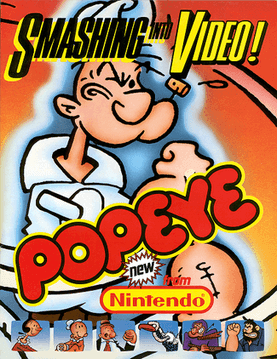
Popeye
Arcade

Mario Bros.
Arcade
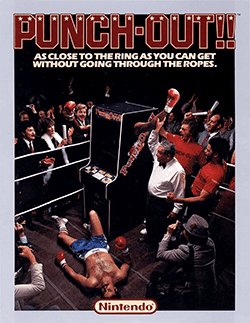
Punch-Out!!
Arcade
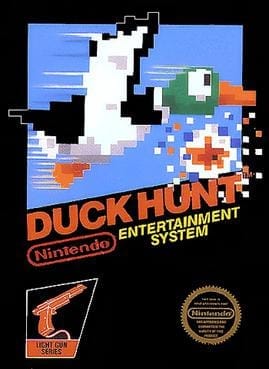
Duck Hunt
NES

Excitebike
NES / Arcade

Super Mario Bros.
NES

Metroid
NES / Famicom Disk System

Kid Icarus
NES / Famicom Disk System

The Legend of Zelda
NES

Mike Tyson's Punch-Out!!
NES

Super Mario Bros. 3
NES / Famicom

Super Mario Bros. 2
NES

Zelda II
NES
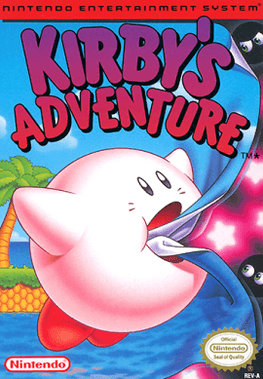
Kirby's Adventure
NES
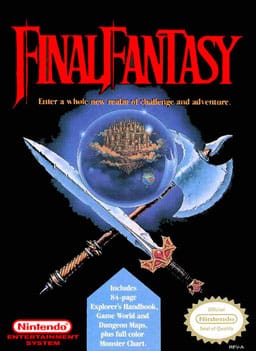
Final Fantasy
NES

Super Mario World
SNES

F-Zero
SNES

The Legend of Zelda: A Link to the Past
SNES

Super Mario Kart
SNES

Star Fox
SNES

Super Metroid
SNES

Donkey Kong Country
SNES

EarthBound
SNES

Super Mario World 2: Yoshi's Island
SNES

Super Mario Land
Game Boy

The Legend of Zelda: Link's Awakening
Game Boy

Kirby's Dream Land
Game Boy

Pokémon Red and Blue
Game Boy

Super Mario 64
Nintendo 64

GoldenEye 007
Nintendo 64