Gotcha
1973 · Maze · Arcade
Overview
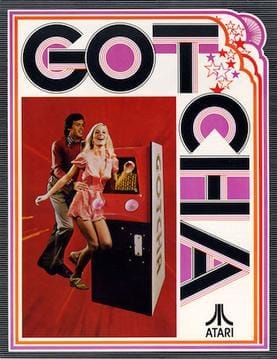
Gotcha (1973) is Atari's two-player arcade maze chase, in which one player pursues the other through a shifting maze — an ancestor of Pac-Man's formula.
Deep Dive
Gotcha set one player hunting the other through a maze that kept changing as they ran, so no two games played out the same way. That asymmetric chase — one pursuer, one quarry — laid down the maze-chase idea that Pac-Man would refine seven years later. The game is remembered as much for its cabinet as its play: Atari's original controls were rubber domes meant to suggest female anatomy, and they were swapped for conventional joysticks after complaints.
Developer Story
Gotcha was released by Atari in 1973, designed as a maze chase game where one player pursues another through a randomly generated maze. It is historically notable — and notorious — for its original joystick design: hemispherical rubber protrusions intended to suggest female anatomy, which were quickly replaced with conventional joysticks after public complaints.
Did You Know?
- Gotcha's original joystick design was shaped like a breast — a marketing decision by Atari that caused immediate controversy and was quickly replaced.
- The game established the maze-chase format that Pac-Man would perfect seven years later.
- It was one of the first two-player games where one player chased the other rather than both competing symmetrically.
- The random maze generation meant no two games were identical — an early example of procedural content in games.
Sources & further reading
- Gotcha (video game) — Wikipedia