Platform Games
Jump, run, explore — the genre that gave the world Mario

License: GPL
| First game | Donkey Kong (Nintendo, 1981) |
| Defining title | Super Mario Bros. (1985) |
| Best-selling platformer | Super Mario Bros. (40M+ copies) |
| Key designers | Shigeru Miyamoto, Takashi Tezuka |
Platform games task players with navigating environments by jumping across suspended platforms and obstacles. Donkey Kong introduced the jump mechanic in 1981; Super Mario Bros. perfected it in 1985, creating one of the most commercially successful and culturally influential genres in history.
Overview
Platform games — platformers — are games where the player navigates a character through environments by running and jumping, clearing gaps, obstacles, and enemies positioned on suspended platforms or terrain at varying heights. The jump is the defining mechanic: its arc, timing, and feel define the entire game's identity. Good platformer design communicates danger and reward purely through visual level geometry, teaching players new mechanics without a single word of instruction.
History
The jump was invented as a game mechanic in Donkey Kong (Nintendo, 1981), designed by a young Shigeru Miyamoto. Players controlled a carpenter named Jumpman — later renamed Mario — climbing construction girders and leaping over barrels hurled by an escaped gorilla. Donkey Kong was the highest-earning arcade cabinet in North America in 1981 and introduced both Miyamoto and Mario to the world.
Activision's Pitfall! (Atari 2600, 1982), designed by David Crane in an extraordinarily short development cycle, brought platform mechanics to home consoles. Players swung on vines, leapt over alligators, and descended into underground passages across a jungle adventure. Pitfall! sold over four million copies — one of the best-selling Atari 2600 titles ever made.
Super Mario Bros. (Nintendo, 1985) perfected the genre. Bundled with every NES sold in North America, it became the best-selling video game in history for nearly two decades. Miyamoto and Tezuka's design remains a masterclass: World 1-1 functions as a complete interactive tutorial using only level geometry and enemy placement — no text, no tooltips, no instructions. Players learned entirely by doing.
In Europe, the ZX Spectrum and Commodore 64 produced their own platformer traditions. Manic Miner (1983) and Jet Set Willy (1984) by Matthew Smith were celebrated for fiendish level design. Ultimate Play the Game (later Rare) invented the isometric 3D platformer with Knight Lore (1984). Sega's Alex Kidd series offered Nintendo direct competition on the Master System.
Mechanics
The jump mechanic's feel — the height of the arc, the moment of mid-air directional control, the weight on landing — is the soul of every platformer. Designers invest enormous effort tuning the physics. Super Mario Bros. allows directional correction mid-jump; holding the button extends the arc; running builds momentum that changes jump distance. These subtleties reward mastery without being explicitly taught.
Level design in platformers communicates entirely through visual language. Coins mark the correct path; a gap's width signals whether to run or walk; red mushrooms signal danger. Secrets reward curiosity. The difficulty curve introduces each new mechanic in a safe context before testing it under pressure — a design principle Miyamoto called "teaching through failure."
Cultural Impact
Super Mario Bros. sold over 40 million copies and remained the best-selling game of all time until Wii Sports in 2009. Mario became the most recognisable fictional character on Earth, surpassing Mickey Mouse in a 1990 survey of American children. The platformer genre taught an entire generation the language of video games: jump on enemies to defeat them, coins reward exploration, the princess is always in another castle. The visual and mechanical vocabulary Miyamoto built in 1985 still forms the foundation of modern game design literacy.
41 Games in Archive

Space Panic
Arcade

Donkey Kong
Arcade

Joust
Arcade
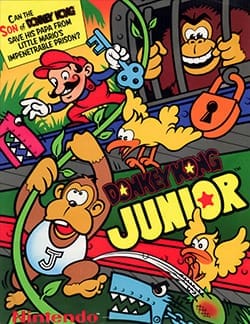
Donkey Kong Jr.
Arcade

Pitfall!
Atari 2600

Mario Bros.
Arcade

Lode Runner
Apple II / Multiple

Manic Miner
ZX Spectrum

Ghosts 'n Goblins
Arcade

Impossible Mission
Commodore 64

Jet Set Willy
ZX Spectrum

Pac-Land
Arcade

Bomb Jack
Arcade

Super Mario Bros.
NES

Bubble Bobble
Arcade

Castlevania
NES / Famicom Disk System

Kid Icarus
NES / Famicom Disk System

Solomon's Key
Arcade

Rolling Thunder
Arcade
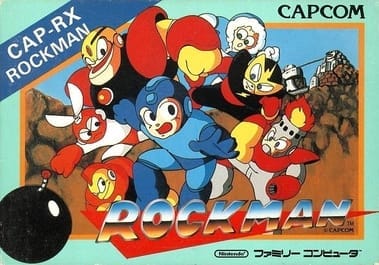
Mega Man
NES

Shinobi
Arcade

Bionic Commando
Arcade

Mega Man 2
NES

Ghouls 'n Ghosts
Arcade

Super Mario Bros. 3
NES / Famicom

Ninja Gaiden
Arcade / NES

Blaster Master
NES

Strider
Arcade

Batman
NES

DuckTales
NES

Prince of Persia
Apple II / DOS

Mega Man 3
NES