Fighting Games & Beat 'em Ups
One-on-one combat and brawling — the arcade's competitive heart

License: CC BY 3.0
| First fighting game | Karate Champ (Data East, 1984) |
| First beat 'em up | Kung-Fu Master (Irem, 1984) |
| Defining title | Street Fighter II (Capcom, 1991) |
| Key developers | Capcom, Namco, Technos, Data East |
Fighting games pit players in head-to-head combat using special moves and combos. Beat 'em ups send players through side-scrolling waves of enemies. Together, these two genres created competitive gaming culture and the cooperative couch-play tradition.
Overview
Fighting games are competitive games where two characters — player-controlled or AI — battle using precise inputs, special moves, and combo sequences. Health bars measure progress toward victory. Beat 'em ups (brawlers) take the same martial arts aesthetic into a side-scrolling format where one or two players fight through waves of enemies. Both genres share a commitment to character diversity, readable animation, and the primacy of learning to read and counter an opponent's behaviour.
History
Data East's Karate Champ (1984) was the first dedicated one-on-one fighting game, using two joysticks to control a karateka through a tournament. Konami's Yie Ar Kung-Fu (1985) added multiple opponents with distinct fighting styles, enriching the challenge.
Simultaneously, Irem's Kung-Fu Master (1984) — adapted from a Bruce Lee film — defined the side-scrolling brawler. A hero fights through five floors of a building, kicking and punching waves of goons. Technos Japan's Double Dragon (1987) added two-player cooperation, creating the couch co-op brawling tradition that made arcades genuinely social spaces.
Capcom's Street Fighter (1987) introduced six attack buttons and special moves executed by joystick motions — the quarter-circle fireball that defined fighting game controls forever. Street Fighter II: The World Warrior (1991) is one of the most significant games ever made: eight selectable world warriors each with unique move sets, combo systems discovered by the player community rather than formally designed, and a versus mode that turned arcades into battlegrounds. Street Fighter II earned over $1.5 billion in arcade revenue and sparked a fighting game golden age through the early 1990s.
Mechanics
Fighting games operate on frame data — the precise number of game frames each action takes. Attacks have startup frames (before the hitbox activates), active frames (when the hit can connect), and recovery frames (vulnerability after the attack). Expert players memorise these to maximise offensive pressure and punish opponents' mistakes. The skill ceiling is effectively infinite: every action by both players simultaneously branches into dozens of possible game states.
Beat 'em up mechanics are simpler by design: jump attacks, grab throws, and crowd-control moves let players manage groups of enemies. Enemy AI follows readable patterns, rewarding observation and positional play over frame-perfect execution.
Cultural Impact
Street Fighter II created competitive gaming culture as we understand it. Players gathered around cabinets to watch skilled players; challenger coins queued opponents on the screen bezel. The tier list, the tournament, the grudge match — all established around Street Fighter II in arcades before the internet existed. EVO, now the world's largest fighting game tournament, traces its lineage directly to these gatherings. Beat 'em ups created the cooperative couch-gaming tradition — two players, side by side, clearing the screen together — that defined a generation of shared gaming memories.
16 Games in Archive
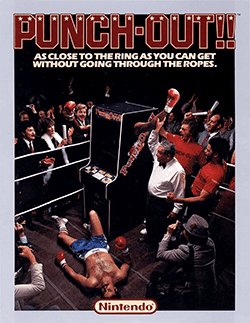
Punch-Out!!
Arcade
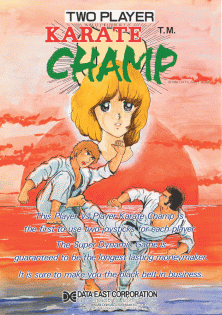
Karate Champ
Arcade

Kung-Fu Master
Arcade
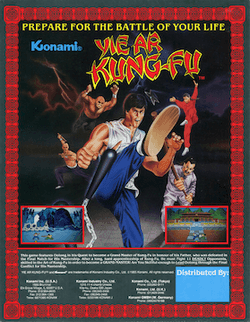
Yie Ar Kung-Fu
Arcade

Rush'n Attack
Arcade

Double Dragon
Arcade
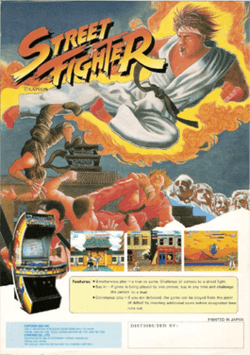
Street Fighter
Arcade

Rastan
Arcade

Mike Tyson's Punch-Out!!
NES
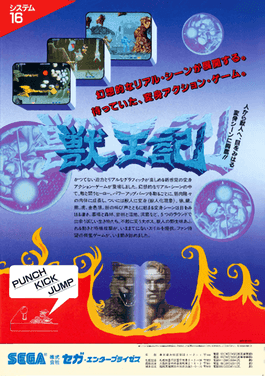
Altered Beast
Arcade

Bad Dudes vs. DragonNinja
Arcade

Golden Axe
Arcade

Final Fight
Arcade

Teenage Mutant Ninja Turtles
Arcade

Battletoads
Arcade / NES

WrestleFest
Arcade