Shoot 'em Ups
From Spacewar! to bullet hell — the genre that launched an industry

License: Public Domain
| First game | Spacewar! (1962) |
| First commercial hit | Space Invaders (1978) |
| Peak arcade era | 1978 – 1985 |
| Key developers | Taito, Namco, Atari, Williams |
Shoot 'em ups are games where the player pilots a craft shooting enemies while dodging their fire. No genre has been more commercially transformative: Space Invaders alone turned video games from novelty into a billion-dollar global industry.
Overview
Shoot 'em ups — affectionately called "shmups" by enthusiasts — are action games where the player controls a craft or character whose primary ability is shooting. Enemies attack in waves and patterns; survival demands fast reflexes and spatial awareness. The genre spans fixed-position shooters like Space Invaders, omnidirectional arena shooters like Asteroids, horizontally-scrolling shooters like Gradius, and the hyper-dense "bullet hell" games of the 1990s onward.
History
The genre was born at MIT in 1962 when students Martin Graetz, Steve Russell, and Wayne Wiitanen wrote Spacewar! for the PDP-1 mainframe — two spaceships orbiting a gravity star, shooting at each other. The game spread across every university with a PDP computer, making it the first widely-played digital game. When Nolan Bushnell commercialised the concept as Computer Space (1971), the result was too complex for bar patrons. But the proof-of-concept led him to found Atari the following year.
Taito's Space Invaders (1978) solved the complexity problem with a single joystick and one fire button. Ranks of aliens descended, accelerating as you shot them down — a terrifyingly simple feedback loop. Space Invaders was so successful in Japan that the government reportedly had to triple 100-yen coin production. Licensed to Midway in North America, it sold over one million arcade cabinets — the first game to do so. When Atari released it for the 2600 console in 1980, console sales quadrupled: Space Invaders was gaming's first killer app.
Namco's Galaga (1981) refined the formula with diving enemy formations and the tactical gamble of letting your ship be captured to fight as a twin. Atari's Asteroids (1979) explored a different design space — vector graphics, rotational physics, the terror of inertia in empty space. Williams' Defender (1981) pushed complexity to its limits with a scrolling planet, a minimap scanner, and five simultaneous controls, briefly becoming the highest-grossing arcade game ever made.
The mid-1980s expanded the genre to home computers. On the Commodore 64 and ZX Spectrum, games like Uridium and R-Type ports thrived. The Japanese branch evolved toward "bullet hell" — screens dense with enemy projectiles demanding memorised patterns of movement — pioneered by Compile and later Cave through the 1990s.
Mechanics
The fundamental tension is between offence (shooting to score) and defence (avoiding destruction). Fixed shooters like Space Invaders reduce this to a pure timing puzzle on a single axis. Scrolling shooters add a second dimension of evasion and introduce terrain. Omnidirectional games like Asteroids demand mastery of momentum and rotational movement.
Power-up systems — spread shots, speed boosts, invincibility bombs — create risk/reward decisions layered over the core reflex challenge. Score multipliers and combo systems reward aggressive play. Enemy bullet patterns in advanced games function as spatial puzzles: safe routes must be read and memorised under pressure.
Cultural Impact
Space Invaders alone generated an estimated $13 billion (inflation-adjusted) over its arcade lifetime. The game's grid of descending aliens became the universal visual shorthand for video games — an icon that predates any other gaming symbol. The competitive high-score culture born in shoot 'em ups — the public leaderboard, the crowd watching a skilled player, the obsession with a single number — established gaming as both personal challenge and social performance. That culture persists in speedrunning and competitive gaming communities today.
60 Games in Archive

Spacewar!
DEC PDP-1

Computer Space
Arcade

Galaxy Game
PDP-11 Arcade Cabinet

Space Wars
Arcade

Space Invaders
Arcade

Asteroids
Arcade

Galaxian
Arcade
Tail Gunner
Arcade

Missile Command
Arcade

Battlezone
Arcade

Berzerk
Arcade

Centipede
Arcade

Defender
Arcade

Galaga
Arcade

Scramble
Arcade

Tempest
Arcade

Gorf
Arcade

Wizard of Wor
Arcade

Stargate
Arcade

Robotron: 2084
Arcade

Moon Patrol
Arcade

Time Pilot
Arcade

Millipede
Arcade

Sinistar
Arcade

Xevious
Arcade

River Raid
Atari 2600

Gravitar
Arcade
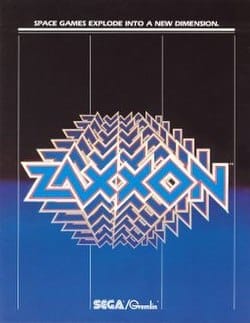
Zaxxon
Arcade

Star Wars
Arcade

Spy Hunter
Arcade

Gyruss
Arcade
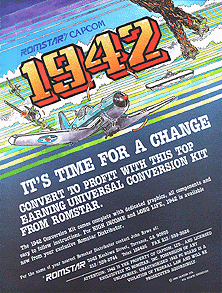
1942
Arcade