Yuji Naka
Japan · Born 1965 · Sega / Sonic Team · Programmer / Game Designer
Yuji Naka programmed the original Sonic the Hedgehog engine and co-founded Sonic Team, directing Nights into Dreams and building Sega's most enduring mascot franchise.
Yuji Naka joined Sega in 1984 at the age of eighteen with no formal programming education, having taught himself assembly language at home. His first major credit was the Master System version of Girl's Garden (1985), but he rose to prominence as the lead programmer of Phantasy Star (1987) on the Master System — one of the first console RPGs with a continuous overworld, first-person dungeons, and a science-fantasy setting presented in full colour. The Phantasy Star engine demonstrated his ability to extract performance from Sega's 8-bit hardware well beyond what contemporaries considered possible, establishing his reputation internally as the company's most technically gifted programmer. In 1990 Naka was assigned to a project conceived by planner Yuji Ohshima and designer Naoto Oshima to create a mascot character for Sega capable of rivalling Nintendo's Mario. Working under extreme time pressure, Naka developed a physics engine built around momentum conservation: Sonic's speed was not a cosmetic feature but a mechanical consequence of how gravity, slopes, and circular loops interacted with the character's velocity. Players who understood the physics could maintain full speed across entire levels; those who did not experienced a punishing stop-start game. This duality — the game as both spectacle and skill test — was central to Sonic the Hedgehog's (1991) commercial success on the Sega Genesis and briefly made the Genesis the best-selling console in North America. Naka co-founded Sonic Team as a semi-independent unit within Sega in 1994 and directed Nights into Dreams (1996) for the Saturn — a game that used the Saturn's analogue pad to control flight through dream environments with a scoring system based on aesthetic line-tracing rather than obstacle avoidance. Nights was critically acclaimed but sold modestly, and the Saturn's underperformance limited its reach. He followed with Sonic Adventure (1998), the franchise's first 3D entry, which launched with the Dreamcast and demonstrated that Sega's new console could deliver large-scale 3D environments competitive with Nintendo 64. Naka continued leading Sonic Team through Sonic Adventure 2 (2001) and the GameCube/PS2 era before leaving Sega in 2006 to found Prope. Naka's legacy is primarily the physics-based platformer design language introduced by Sonic, in which speed, momentum, and spatial geometry are the primary play elements rather than precision jumping. That design DNA informed subsequent 2D and 3D platformers across multiple studios and remains identifiable in the Sonic series today. His work on Phantasy Star also made him one of the architects of the console RPG, a contribution that tends to be overlooked given the later dominance of the Sonic franchise. In 2022 he was convicted of insider trading related to game company stock purchases while employed at Square Enix, casting a shadow over his later career.
- Phantasy Star (1987)
- Sonic the Hedgehog (1991)
- Sonic the Hedgehog 2 (1992)
- Nights into Dreams (1996)
- Sonic Adventure (1998)
- Self-taught programmer who joined Sega at 18 in 1984
- Lead programmer of Phantasy Star (1987) — one of the first console RPGs with a 3D dungeon
- Developed the momentum-based physics engine that defines Sonic the Hedgehog (1991)
- Co-founded Sonic Team as a semi-independent unit within Sega in 1994
- Directed Nights into Dreams (1996) and Sonic Adventure (1998)
56 Games in Archive

Monaco GP
Arcade

Frogger
Arcade

Pengo
Arcade
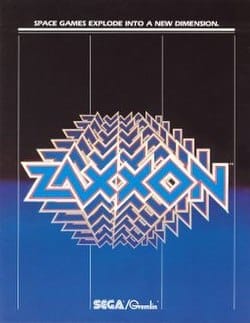
Zaxxon
Arcade

Space Harrier
Arcade

Out Run
Arcade
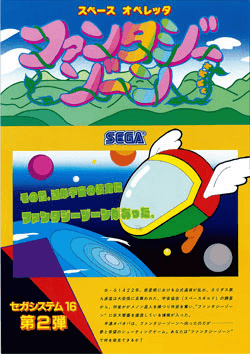
Fantasy Zone
Arcade

Shinobi
Arcade

After Burner
Arcade
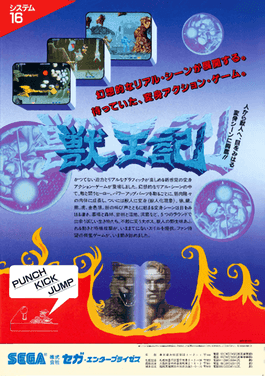
Altered Beast
Arcade

Golden Axe
Arcade

Galaxy Force II
Arcade

Thunder Blade
Arcade

Sonic the Hedgehog
Genesis

Streets of Rage
Genesis

Sonic the Hedgehog 2
Genesis

Streets of Rage 2
Genesis

Gunstar Heroes
Genesis

Shinobi III: Return of the Master Ninja
Genesis

Comix Zone
Genesis

Virtua Fighter
Arcade

Ecco the Dolphin
Genesis

Phantasy Star IV: The End of the Millennium
Genesis

Vectorman
Genesis

Aladdin
Genesis

NiGHTS into Dreams
Sega Saturn

Panzer Dragoon
Sega Saturn

Virtua Cop
Sega Saturn

Sonic Adventure
Dreamcast

Shenmue
Dreamcast

Crazy Taxi
Dreamcast

Sonic the Hedgehog 3
Genesis