Yu Suzuki
Japan · Born 1958 · Sega AM2 · Game Designer / Arcade Engineer
Yu Suzuki directed Hang-On, Space Harrier, Out Run, Virtua Fighter, and Shenmue, pioneering arcade hardware design and open-world narrative gaming across four decades.
Yu Suzuki joined Sega in 1983 after studying electrical engineering and immediately began work on arcade hardware rather than game content. His first project, Hang-On (1985), was simultaneously a game and a custom motorcycle cabinet — a full-scale sit-astride replica of a racing bike with force-feedback handlebars, powered by a proprietary 16-bit board he co-designed called the Sega Super Scaler. The Super Scaler technique used sprite scaling at different rates to create a convincing illusion of three-dimensional speed on flat 2D hardware, and Suzuki pushed it to its visual limit in Space Harrier (1985) and Out Run (1986) — both of which featured hydraulic motion-platform cabinets that were as much fairground rides as games. Out Run in particular became a cultural landmark: its branching route structure, licensed Ferrari Testarossa, and Hiroshi Kawaguchi's radio-selectable soundtrack established a template for aspirational driving games that persists to this day. Suzuki's design philosophy was built around sensation and presence — he wanted players to feel physically transported into his games, which explained his obsessive investment in cabinet hardware. When 3D polygon technology became viable in the early 1990s, he directed Virtua Racing (1992) and Virtua Fighter (1993), the latter being the first 3D polygon fighting game. Virtua Fighter's move system was based on motion-capture data from martial artists and introduced a three-button (punch, kick, guard) control scheme of remarkable tactical depth for an arcade game. The Model 1 and Model 2 custom arcade boards Suzuki's team developed for these games were years ahead of any contemporary home console hardware and were subsequently licensed to other Sega divisions and third parties. Shenmue (1999) for the Sega Dreamcast represented the fullest expression of Suzuki's ambitions: an open-world game set in a photorealistic recreation of Yokosuka, Japan, in 1986, featuring a cast of over 500 named characters each with individual daily schedules, the first Quick Time Event system, a fully playable miniature Sega arcade, and a narrative spanning what was planned to be eleven chapters. The project reportedly cost $47–70 million — making it the most expensive video game ever made at the time — and sold modestly relative to its budget. Shenmue II followed in 2001, and despite the Dreamcast's discontinuation, both games accumulated devoted followings who funded a Kickstarter campaign that raised $7 million in 2015 to produce Shenmue III (2019). Suzuki's legacy spans hardware design, arcade cabinet engineering, genre creation, and open-world game design. The Super Scaler arcade boards he designed remained the technical standard for sprite-scaling racers for nearly a decade. Virtua Fighter defined fighting game mechanics that influenced Tekken, Dead or Alive, and every subsequent 3D fighter. Shenmue's design philosophy — systemic open worlds with detailed NPC simulation and embedded mini-games — can be traced through everything from Grand Theft Auto III to Red Dead Redemption 2. Suzuki remains active in game development through his studio Ys Net and continues to develop the Shenmue series.
- Hang-On (1985)
- Space Harrier (1985)
- Out Run (1986)
- Virtua Fighter (1993)
- Shenmue (1999)
- Joined Sega in 1983 as a hardware engineer before becoming a game director
- Designed the Sega Super Scaler arcade board powering Hang-On and Out Run
- Virtua Fighter (1993) was the first 3D polygon fighting game
- Shenmue (1999) was the most expensive game ever made at the time, reportedly costing $47–70 million
- Out Run (1986) featured a branching route system and player-selectable licensed music
56 Games in Archive
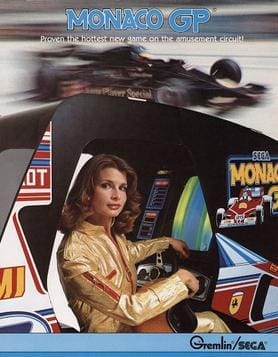
Monaco GP
Arcade

Frogger
Arcade

Pengo
Arcade
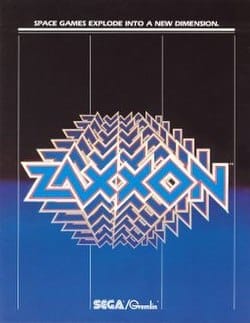
Zaxxon
Arcade

Space Harrier
Arcade

Out Run
Arcade
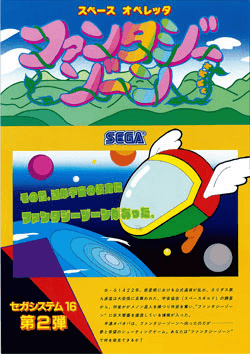
Fantasy Zone
Arcade

Shinobi
Arcade

After Burner
Arcade
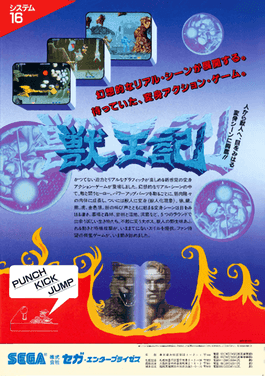
Altered Beast
Arcade

Golden Axe
Arcade

Galaxy Force II
Arcade

Thunder Blade
Arcade

Sonic the Hedgehog
Genesis

Streets of Rage
Genesis

Sonic the Hedgehog 2
Genesis

Streets of Rage 2
Genesis

Gunstar Heroes
Genesis

Shinobi III: Return of the Master Ninja
Genesis

Comix Zone
Genesis

Virtua Fighter
Arcade

Ecco the Dolphin
Genesis

Phantasy Star IV: The End of the Millennium
Genesis

Vectorman
Genesis

Aladdin
Genesis

NiGHTS into Dreams
Sega Saturn

Panzer Dragoon
Sega Saturn

Virtua Cop
Sega Saturn

Sonic Adventure
Dreamcast

Shenmue
Dreamcast

Crazy Taxi
Dreamcast

Sonic the Hedgehog 3
Genesis