Hideo Kojima
Japan · Born 1963 · Konami / Kojima Productions · Game Designer / Director / Writer
Hideo Kojima created Metal Gear and developed the stealth game genre, combining cinematic storytelling with postmodern game design across a career spanning four decades.
Hideo Kojima joined Konami in 1986 after failing to find work as a film director — his initial application to enter the film industry was rejected, and he pivoted to game development as the medium he felt most accessible to a young creator without connections. His first project at Konami, Antarctic Adventure (1986), was a runner game for the MSX home computer, but he was soon assigned to develop a war game for the MSX2. Dissatisfied with the action-shooting design brief, Kojima redesigned the project as a game about infiltration and avoidance rather than combat: Metal Gear (1987) tasked the player with avoiding enemy sight lines, hiding in plain sight, and acquiring equipment through stealth rather than firepower. The concept was partly dictated by the MSX2's hardware — it could not handle large numbers of enemies on screen simultaneously — but Kojima recognised that the constraint produced a more original and tense gameplay experience than a conventional shooter would have. Kojima's design philosophy is explicitly cinematic: he conceives his games as films that players inhabit, using extended cutscene sequences, directorial camera work, and film-school reference points to create experiences that blur the boundary between passive viewing and active play. His scripts are written at feature-film length and beyond; Metal Gear Solid (1998) for the PlayStation contained hours of voiced dialogue, a cast of characters with psychological complexity unusual in games, and a narrative twist — the player character Solid Snake is fighting a genetic copy of himself — that commented on player identity and immersion in a way no prior game had attempted. The game also featured famous fourth-wall breaks: enemies who read the player's memory card data, a boss who could only be defeated by switching the controller to the second port, and codec calls where characters discussed game mechanics as if they were real world phenomena. Kojima's catalogue beyond Metal Gear includes Snatcher (1988), a cyberpunk graphic adventure deeply influenced by Blade Runner and Terminator that was one of the first games to use fully voiced dialogue; Policenauts (1994), a point-and-click thriller about an astronaut returning to a space colony; and Zone of the Enders (2001), a mecha action game notable primarily for including a Metal Gear Solid 2 demo that drove hardware sales. Metal Gear Solid 2: Sons of Liberty (2001) was a deliberate subversion of player expectations — the advertised protagonist Snake was replaced mid-game by a new character, Raiden, in a metatextual statement about media manipulation and player passivity that divided audiences and is now studied in game studies curricula. Metal Gear Solid 3: Snake Eater (2004) returned to linear action-espionage with a Cold War narrative, and Metal Gear Solid V: The Phantom Pain (2015) brought the series into an open-world format. Kojima's acrimonious departure from Konami in 2015, widely reported but never fully explained by either party, led to the founding of Kojima Productions as an independent studio. Death Stranding (2019), his first independent release, was a walking-and-delivery game set in a post-apocalyptic America connected by social mechanics that let players leave objects and structures for other players to discover — a meditation on connection and isolation that divided critics but won numerous awards. Kojima's influence on game narrative design is pervasive: the cutscene-heavy, auteur-driven, philosophically ambitious AAA game is a category he largely created, and arguments about the appropriate ratio of cutscene to gameplay in prestige games are still conducted with reference to his work.
- Metal Gear (1987)
- Snatcher (1988)
- Metal Gear Solid (1998)
- Metal Gear Solid 3: Snake Eater (2004)
- Death Stranding (2019)
- Joined Konami in 1986 after being rejected from the film industry
- Invented the stealth game genre with Metal Gear (1987) on the MSX2
- Metal Gear Solid (1998) featured fourth-wall breaks including reading the player's memory card data
- Metal Gear Solid 2 (2001) replaced the advertised protagonist mid-game as a metatextual statement
- Left Konami in 2015 to found Kojima Productions; Death Stranding (2019) was his first independent release
31 Games in Archive

Scramble
Arcade

Frogger
Arcade

Time Pilot
Arcade

Track & Field
Arcade

Gyruss
Arcade
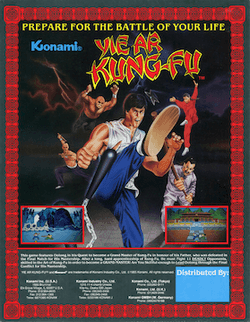
Yie Ar Kung-Fu
Arcade

Gradius
Arcade

Rush'n Attack
Arcade

Castlevania
NES / Famicom Disk System

Life Force
Arcade

Metal Gear
MSX2 / NES

Contra
Arcade / NES

Teenage Mutant Ninja Turtles
Arcade

Jackal
Arcade
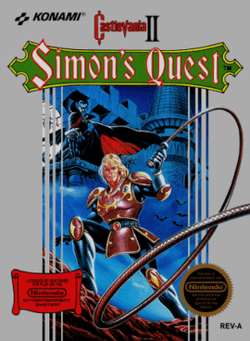
Castlevania II: Simon's Quest
NES

Gradius II
Arcade
Contra (arcade)
Arcade

Castlevania: Symphony of the Night
PlayStation

Metal Gear Solid
PlayStation

Super Castlevania IV
SNES

Silent Hill
PlayStation

Contra III: The Alien Wars
SNES

Rocket Knight Adventures
Genesis

Dance Dance Revolution
Arcade

Teenage Mutant Ninja Turtles IV: Turtles in Time
SNES

Sunset Riders
SNES

Vampire Killer
MSX

Gradius
MSX

Knightmare
MSX

SD Snatcher
MSX

Dracula X: Rondo of Blood
TurboGrafx-16