Epyx
USA · Founded 1978 · Closed 1993 · 1978 – 1993
Epyx produced some of the most technically ambitious games on the Atari and Commodore 64 platforms, including the Summer Games series, Impossible Mission, and Chip's Challenge, and co-designed the Atari Lynx hardware before financial difficulties ended the company.
Epyx was founded in 1978 as Automated Simulations by Jim Connelley and Jon Freeman in San Jose, California, initially producing fantasy role-playing games for the TRS-80 and Apple II platforms. The company renamed itself Epyx in 1983 to reflect its broader ambitions and began producing a catalogue that spanned action games, sports simulations, and role-playing titles with consistent technical quality. The early Epyx titles — Jumpman (1983), Temple of Apshai (1979) — established the company's reputation for games that pushed platform capabilities while remaining commercially accessible. Summer Games (1984) was Epyx's commercial breakthrough and established a template for the multi-event sports simulation genre that would be replicated throughout the decade. The game presented eight Olympic-style athletic events — swimming, gymnastics, cycling, track — each implemented as a distinct mini-game with its own control scheme. Each event was a convincing simulation of the relevant sport rather than a generic action game with a sports skin, and the competition structure — up to eight players competing across events — made it one of the most effective party gaming experiences on the Commodore 64. Summer Games II, Winter Games, World Games, and California Games followed in rapid succession, each presenting new events with the same technical ambition. The Games series sold over one million copies collectively and made Epyx one of the most successful American publishers of the mid-1980s. Impossible Mission (1984) on the Commodore 64 was a technical showpiece: a platform-action game in which the player navigated a villain's fortress, searching furniture for puzzle pieces while evading patrolling robots. The digitised speech — "Another visitor. Stay a while... stay forever!" — was among the first in a commercial game and remains one of the most quoted lines in gaming history. The game used a procedurally assembled puzzle solution that varied across playthroughs, giving it replayability unusual for the era. The sequel, Impossible Mission II (1988), expanded the concept without matching the original's tightness. Epyx's most consequential late-career achievement was the hardware work that led to the Atari Lynx. The company designed the colour handheld as the Handy console in partnership with Amiga co-creator RJ Mical and Dave Needle, producing hardware that was technically far superior to Nintendo's Game Boy: a backlit colour screen, sixteen-bit processing, and hardware sprite scaling. The Handy was demonstrated to Atari, who licensed and released it as the Lynx in 1989. Epyx received a licensing fee but not ongoing royalties, and the arrangement did not save the company's finances; Epyx filed for bankruptcy in 1992 and formally dissolved in 1993. The Lynx hardware, without Epyx's continued involvement, never received the software support needed to compete with the Game Boy despite its technical superiority — a recurring lesson in gaming hardware history.
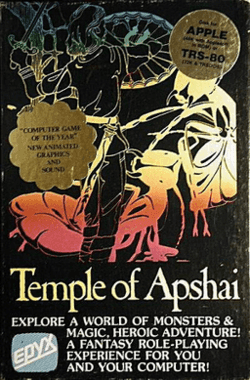
- Temple of Apshai (1979)
- Jumpman (1983)
- Summer Games (1984)
- Impossible Mission (1984)
- Winter Games (1985)
- World Games (1986)
- California Games (1987)
- Impossible Mission II (1988)
- Founded 1978 as Automated Simulations; renamed Epyx in 1983
- Summer Games (1984) established the multi-event Olympic sports simulation genre on home computers
- Impossible Mission (1984) featured digitised speech among the first in a commercial game: "Another visitor. Stay a while... stay forever!"
- Co-designed the Atari Lynx (originally called the Handy) with RJ Mical and Dave Needle; filed for bankruptcy in 1992