Richard Garriott
USA · Born 1961 · Origin Systems · Game Designer / Writer
Richard Garriott created the Ultima series and the concept of virtual ethics in games, building the role-playing game as a moral philosophy simulator under the persona of Lord British.
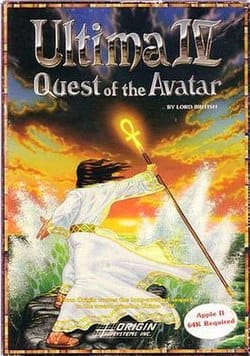
Richard Garriott began programming games in 1977 at age fifteen on a teletype terminal at his Houston high school, teaching himself BASIC to write Dungeons & Dragons-style dungeon crawlers. His first commercially sold game, Akalabeth: World of Doom (1980), was a first-person dungeon RPG he sold in Ziploc bags at a local computer store; a distribution deal with California Pacific Computer Company resulted in 30,000 copies sold and enough revenue to fund his next project. Ultima (1981), published by Sierra On-Line for the Apple II, introduced a world map connecting towns and dungeons, multiple playable races and classes, and a science-fantasy narrative scope that exceeded anything previously attempted in a microcomputer RPG. Garriott established Origin Systems in 1983 with his brother Robert to publish subsequent Ultima titles independently. Garriott's most significant creative decision came with Ultima IV: Quest of the Avatar (1985), which abandoned the traditional RPG goal of defeating an antagonist in favour of a moral self-improvement quest. The player's objective was to embody eight virtues — Honesty, Compassion, Valour, Justice, Sacrifice, Honour, Spirituality, and Humility — through in-game choices, transforming the RPG from a power fantasy into an ethical simulator. This was the first time a major game had used its mechanics to make an argument about how players should behave, and it influenced virtually every narrative RPG that followed. The Avatar concept and the eight virtues remained central to the Ultima series through Ultima IX: Ascension (1999). Origin Systems under Garriott's direction developed Ultima Online (1997), the first commercially successful massively multiplayer online RPG. The game's persistent world, player housing, and player-driven economy established design patterns that World of Warcraft and every subsequent MMORPG inherited. Garriott maintained his in-game persona as Lord British — a near-immortal sovereign who appeared at major server events — and the game's social and economic systems were sophisticated enough to become subjects of academic study. Electronic Arts acquired Origin Systems in 1992 and shut it down in 2004; Garriott departed EA in 2000 after Ultima IX's troubled launch. Garriott's influence on role-playing game design is matched only by Gary Gygax and the Dungeons & Dragons creators who inspired him. The virtue system of Ultima IV introduced moral consequence as a game mechanic decades before it became standard in Western RPGs. Ultima Online proved that hundreds of thousands of players could coexist in a persistent virtual world and share an economy, a revelation that reshaped the entire games industry's understanding of what online gaming could be. Garriott became the sixth private citizen to travel to space aboard the International Space Station in 2008. He later founded Portalarium and developed Shroud of the Avatar (2018), a spiritual successor to Ultima that struggled to find its audience in the crowded MMORPG market.
- Akalabeth (1980)
- Ultima (1981)
- Ultima IV: Quest of the Avatar (1985)
- Ultima VI: The False Prophet (1990)
- Ultima Online (1997)
- Sold Akalabeth (1980) in Ziploc bags at a local computer store at age 18
- Founded Origin Systems with his brother Robert in 1983
- Ultima IV (1985) was the first major game to replace villain-defeat with a virtue-based moral goal
- Ultima Online (1997) was the first commercially successful MMORPG
- Traveled to the International Space Station as a private citizen in 2008