Kirby
HAL Laboratory · Since 1992
HAL Laboratory's pink puffball franchise is Nintendo's most accessible series — designed initially for players who found other Nintendo games too difficult. Kirby's copy ability, which absorbs enemy powers on contact, makes him simultaneously charming and mechanically deep.
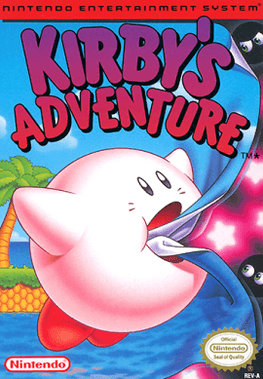
Kirby's Dream Land (1992, Game Boy) was designed by Masahiro Sakurai at age 19 with a specific brief: a game that anyone could complete. The game's default mode required no prior skill; enemies were round and slow; Kirby's floating ability prevented platforming deaths from missed jumps. The franchise's accessibility mandate has remained consistent through decades of entries while the copy ability — introduced in Kirby's Adventure (1993) — added systematic depth that made Kirby games enjoyable for experienced players despite their apparent simplicity. Kirby's Adventure (1993) on NES was a technical showcase: one of the most visually impressive NES games released, pushing the hardware's sprite and colour capabilities at a point when the console was approaching the end of its commercial life. The game's 24 copy abilities created gameplay variety that genuinely rewarded experimentation; finding which ability worked best against each boss was a puzzle with multiple correct answers. The franchise established Kirby as a secondary Nintendo mascot below Mario and Pikachu but above all other characters. The series has maintained consistent quality across hardware generations while experimenting with format: Kirby's Epic Yarn (2010) used textiles as its visual theme and removed the risk of death entirely; Kirby's Return to Dream Land (2011) restored the traditional formula for players who had missed it; Kirby and the Forgotten Land (2022) brought the franchise into full 3D while maintaining its character. HAL Laboratory's willingness to experiment with Kirby in ways Nintendo's primary franchises would not has given the series creative variety despite its consistent visual identity.